2026 Payroll Guide for Australian Businesses
 Apr 27, 2026
Payroll used to be an admin task, but now that has changed. Payroll now sits at the centre of compliance, cashflow, and employee trust. In 2026, Payroll is no longer just about paying your team; it is about every detail & pay cycle done right. The margin for zero errors is now tighter than ever, across reporting obligations and compliance awards, tax withholding, and superannuation.
Their near-real-time visibility into the business reporting through STP is very on point. Errors are no longer buried but are quickly exposed by the ATO (Australian Taxation Office). With regulators and employees keeping a close eye on underpayments, it all has become much more complicated.
For many businesses, this shift has led to a rethink: should payroll stay in-house, or is it time to explore payroll outsourcing in Australia?
Payroll mistakes can cost you time, reputation, and more money than needed.
So much has changed, and almost all of it matters, but running the payroll smoothly is much more important. This guide will help you better understand it all.
Payroll Basics Refresher
Payroll isn’t just the salaries; it also includes:
- Wages & bonuses
- Leave accruals and entitlements
- Superannuation contributions
- PAYG withholding
Where things get tricky is not the “what,” but the “how.”
A classic issue in Australia is the classification of employees vs. contractors. Many businesses still get this wrong. If you treat someone like a contractor but they function as an employee, you could be liable for unpaid super, tax obligations, and penalties.
In 2026, compliance expectations have gotten sharper. Whether you’re handling things internally or relying on payroll processing services, accuracy in setup is everything.
Key Payroll Changes in 2026
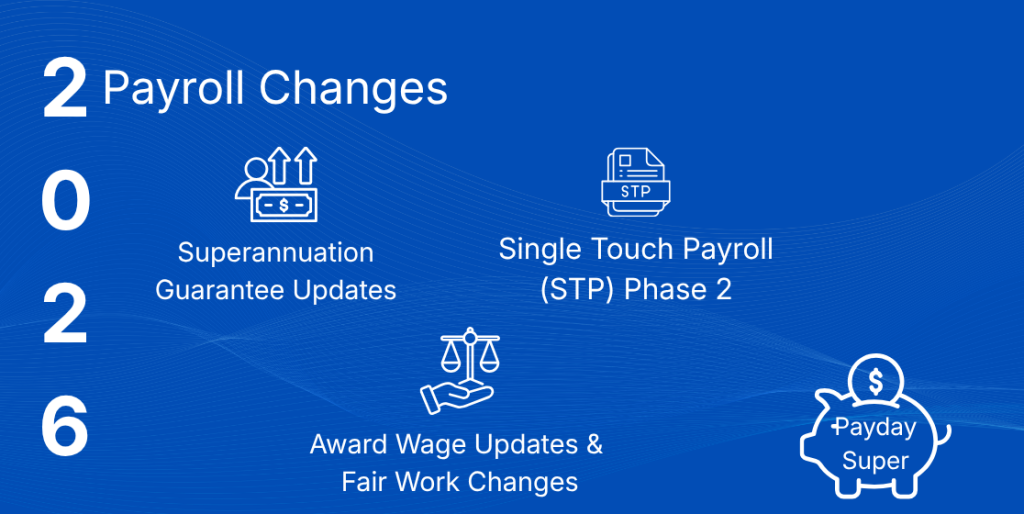
- Superannuation Guarantee Updates:
Employees need to stay updated on super as it isn’t static but increasing gradually. Even the smallest change can affect payroll costs, especially if you have a growing team. Late or non-payment of super will not only trigger penalties but also the Super Guarantee Charge (SGC), which is far less forgiving than standard contributions.
- Single Touch Payroll (STP) Phase 2 – Fully Embedded
STP is now embedded and no longer ‘New’. Now every pay run you process will be strictly monitored & reported directly to the ATO in real time, which means:
- Immediate visibility for regulators
- Minimal room for errors
- Great Data Accuracy pressure
Whether it's an internal team or you have payroll service providers, STP compliance is now non-negotiable.
- Award Wage Updates & Fair Work Changes
Wage compliance is now under scrutiny.
The Fair Work Commission regularly reviews and updates award rates, and businesses are expected to remain aligned with these changes. Misinterpreting awards, especially around penalty rates, overtime, and allowances, remains one of the biggest payroll risks. To avoid such mistakes, many businesses lean on payroll services to reduce complexity.
- Payday Super
The idea of "payday super," where superannuation is paid with wages instead of quarterly, is becoming more popular, even though it isn't required for all businesses yet.
This change is meant to protect workers, but it could hurt the employer's cash flow. Businesses that rely on traditional quarterly cycles may need to rethink their plans or consider payroll outsourcing companies to help them make this change.
Common Payroll Mistakes Aussie Businesses Still Make
1. Misunderstanding of the Award
Flat hourly rates aren't always enough; you need to ensure penalty rates, overtime, and allowances are applied correctly.
2. Not meeting Super Deadlines
Many small businesses have to handle multiple tasks at once and often miss quarterly deadlines.
3. Employee vs Contractor Errors
Misclassification remains a major compliance risk, and it’s being closely monitored.
4. Poor Record-Keeping
The ATO requires businesses to keep payroll records for at least seven years. Incomplete records can create serious issues during audits.
5. STP Reporting Errors
Incorrect data submissions, missed reports, or inconsistencies can quickly raise red flags.
6. DIY Payroll Limitations
As businesses grow, manual or semi-manual systems struggle to keep pace. This is often the tipping point when businesses explore payroll outsourcing in Australia.
Payroll Compliance Checklist for 2026
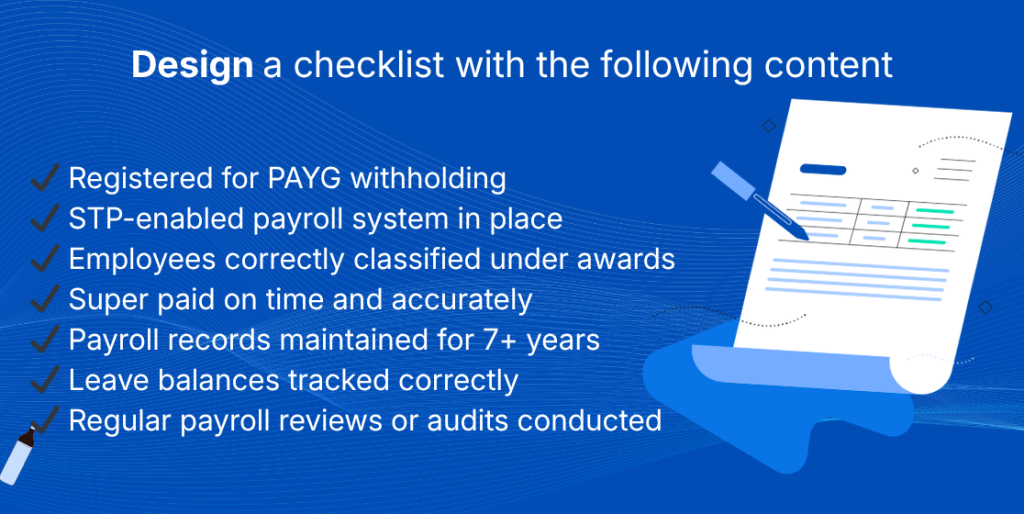
Here’s a quick, practical checklist to stay on track:
- Registered for PAYG withholding
- STP-enabled payroll system in place
- Employees are correctly classified under the awards
- Super paid on time and accurately
- Payroll records maintained for 7+ years
- Leave balances are tracked correctly
- Regular payroll reviews or audits are conducted
If you’re unsure about ticking off all of these confidently, it's perhaps time to consider payroll processing services or external support.
Payroll Software & Automation
Rather than depending on Manual labour that may save money, Automation is better, as it does not increase long-term risks.
Automation is now a standard, because:
- It reduces manual errors
- It saves you more time
- Integration with STP
- Improved Compliance
Popularly used Payroll Processing Tools across Australia (and by Hornbill)
- Xero
- QuickBooks
- MYOB
- Sage
- Dext
- HubDoc
- Karbon
- Deputy
- Employment hero
- ADP
Pairing these software & Tools with payroll service providers is definitely a better move since they require proper setup, monitoring, and compliance knowledge.
When to Outsource Payroll
At some point, an in-house team costs efficiency,
You need Outsourced Payroll services when:
- Too much is spent just on Payroll
- Stressful compliance
- Errors keep occurring
- Team growth continues
- Award Interpretations are unclear from your end
This is exactly where payroll outsourcing companies come in.

Penalties & Risks of Getting Payroll Wrong
Payroll mistakes aren’t minor - they can cause real & hard consequences.
- Incorrect reporting = ATO penalties
- Late super = Super Guarantee Charge (SGC)
- Underpayment = Fair Work penalties
- Back payments to employees
- Reputational damage
Once issues arise, fixing them is often more expensive and time-consuming than preventing them.
That’s why more businesses are proactively investing in business payroll services to mitigate risks rather than responding after issues arise.
Final Thoughts: Keep Payroll Simple, Not Stressful
Payroll in 2026 should be approached seriously but without causing stress.
Businesses that have Payroll sorted do the following 3 things:
- Systems - using reliable tools or providers
- Accuracy - getting details right from the beginning
- Consistency - running payroll properly in every cycle
Compliant, accurate & tension-free Payroll has to be the end goal, whether you handle it internally or rely on payroll services in Australia. A properly set up Payroll will work just fine without being a headache.